
Between Breaths: Living in the Liminal Space Between Living and Dying
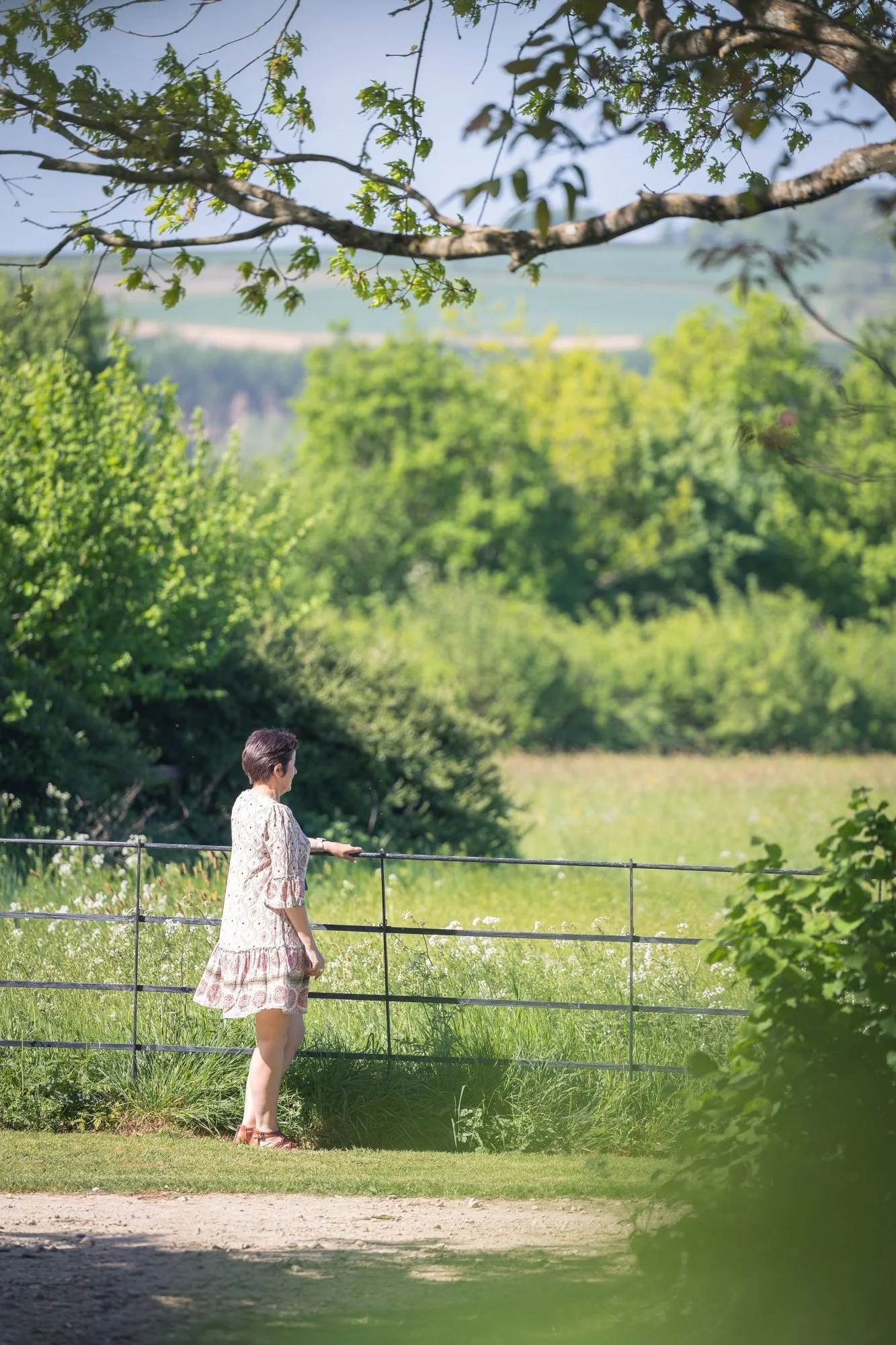
I have wanted to write about this quiet, peaceful, sometimes sad and incredibly uncertain space for a while and explore how this liminal space that I now find myself in intersects with belonging while applying a trauma informed lens. It has taken a while for me to formulate some of my thoughts, and I can’t say that I’m fully there yet but there is at least enough coherence for the beginnings of this exploration.
Liminality
I came to think about being in a ‘liminal space’ when I was informed that my incurable cancer diagnosis had been shifted to a terminal diagnosis. It happened on the 11th July 2025 when it was communicated to me that unless I responded to something, I had months left of living. This confronting news gave me the desire to make meaning by seeking out those who specialise in supporting those of us living this experience.
Liminality is a term rooted in anthropology, describing the “in-between” phase of transition rituals (van Gennep, 1909; Turner, 1967). In the context of having a terminal illness, liminality is providing me with a new map, a country with no name, yet a deeply human experience that most people avoid thinking about. So much happens in this space between living and dying; it is where I spend a considerable amount of my time thinking about my legacy, it’s a place where love deepens, where my soul cries out for nature’s gifts. I am reminded daily that I am living differently now and that life is unrecognisable to me. I have few other points of reference in the geography of my experiences to draw upon.
The future no longer stretches out in front of me. Ambition, drive and the need to plan have left me along with my ability to take my beloved long walks. Who I have been is disappearing and who I am now is taking shape but for the first time. I am fully in the “in-between” phase of a transition that I had not considered that I would live in nor have I ever witnessed in another before me.
There is trauma in how the familiar has been disrupted and the future is now unknowable. The medical model forgets to centre me and offers itself as a transactional experience whereby each interaction is a medical intervention; a canula, bloods, meds, observations. Take these drugs and we’ll try and keep you alive for a while longer.
I tried to talk to a nurse about how it felt to not always understand what was going on with my treatment and then unfortunately, I went to make a cup of tea in the corridor and heard her talking to another nurse stating “Lisa Cherry is complaining that she does not know what is happening.” I quickly returned to my room so that I could not hear any more. I do not want to know what is said about me… but I do know that I was not complaining, just talking about something beyond the transcactional.
Bringing a trauma-informed lens to the liminal space asks us to avoid ‘fixing’ that which cannot fixed, that the ambiguity and complexity of healing is honoured and that room is made for the reconstruction of my identity and the meaning-making of this circumstance.
Belonging
Cultivating belonging can offer continuity when identity feels fragmented; am I still loved, still needed, still woven into the fabric of my community. I can still write, I can still work (albeit less often), I am still important. I don’t want to belong to cancer or to hospitals, yet I do. I have a number, an NHS number, which they ask me for at different times. I am a number now in certain quarters.
My relationship with myself, with time and with my body, has changed. Sometimes I feel incredible and strong and brave, but mostly I feel a fragility which is a very new feeling. I have lived a lifetime of feeling strong and capable and fit and healthy.
I no longer belong to my calendar, to productivity, to goals, to achievements. I now belong to presence, to moments and memories. The past is gone and the future is accessed by using binoculars the wrong way round. Home is not a place anymore, rather it is located in my people, in rituals, in calmness and in solitude and in feeling a deep sense of safety. I find belonging in living differently, in watching the tallest branches of trees sway from my bedroom window. I am not waiting to die but I am finding a way of living differently.
Bringing a trauma-informed lens to thinking about belonging asks us to prioritise psychological safety and relationships and embed practices that reflect new and emerging identities and foster connection through co-regulation and trust.
The Complexity of the Liminal Space and Belonging
I make plans that invariably get cancelled. I have already missed two booked holidays, yet I feel to need to plan memory making, so I keep planning things knowing that these plans may never happen. The love I feel for those closest to me is deeper than ever, yet sometimes I wonder whether I should withdraw to protect them from the intensity of my reality. To live is to die. It is not possible to be alive without also understanding that dying is part of life.
What I really need in this space is to be seen, to be remembered for my work and my love. I notice that many people know this instinctively and write messages to me about what my work has meant to them. How clever that is, to know how important that might be to me. I appreciate being witnessed in this liminal space without sympathy or a being seen as needing to be fixed but from a place of knowing that we all have the capacity to live in this liminal space. That we all need the capacity to live in this space as invariably we will do so, or we will witness someone residing there. I need not be a diagnosis, while also needing adjustments. This is a time to be honoured, yet it has no time line. It could be a few months or a few years. It is sacred.
To be continued…. Hopefully.
Writing has always saved me and that is ultimately why I keep writing books and articles. If you’d like to write a non-fiction book, I’m hosting a day. I’d love you to join me. You can learn more here…