
Belonging and Mattering as Protective Buffers
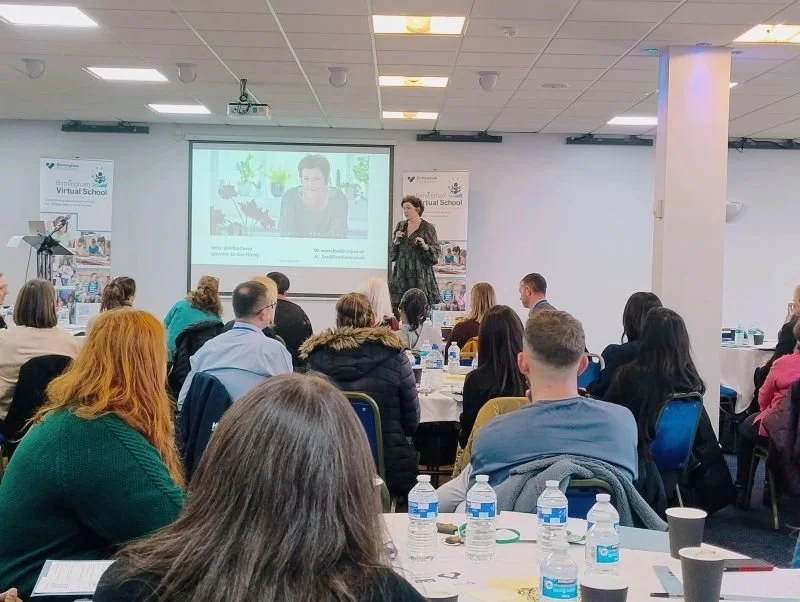
Some of my time is spent delivering keynotes and this morning, I spoke at the Birmingham Virtual School Conference. I love Virtual Schools and for those of you who think I’m talking about a school that operates online, let me explain. A Virtual School in the UK is a local authority-led service that supports the education of children and young people who are in care, those who have been adopted and those who have a social worker. It doesn’t exist as a physical school but acts as a vital bridge between education and children’s services and is entirely focused on the education of the children and young people it supports. This is achieved through tracking their progress, promoting high aspirations and working closely with schools, carers and social workers to ensure that they receive the support they need to thrive academically and emotionally. A statutory service since 2014, it has changed lives - I have no doubt about this at all.
Focusing on belonging and mattering when we’re considering any children living with the legacy of trauma is essential if we’re going to think about healing from trauma. Doing this also seeks to ensure that the children and young people we are talking about are not (re)traumatised by any of the multiple systems that they find themselves in.
Why Belonging Matters
Belonging is about being received and accepted, being held in mind, being seen. For children whose early experiences may have included neglect, abuse, loss or repeated rejection, belonging has not just been disrupted; it may simply have never been accessed at all. It’s complicated, of course, and I don’t wish to oversimplify ‘belonging’, but as it is a human motivation (Baumeister & Leary, 1995). In a nutshell, this means that we will find somewhere to belong to, regardless of whether it will be healthy or unhealthy for us.
Belonging that is healthy for us offers a sense of “I am wanted here,” which helps soothe the nervous system and reduce hypervigilance. It also helps to shape a coherent sense of self.
Why Mattering Heals
I’m noticing how mattering is entering this discussion as an aspect that furthers how we think about belonging. I was introduced to Flett (2025) who researches and writes on mattering in respect of children and young people and immediately incorporated it into my own framework for practice. Matering goes beyond inclusion and says ‘you are significant’, ‘your voice counts’, ‘your presence changes things’. ‘You matter’.
For children and young people living with the legacy of trauma, they may have internalised messages that tell them that they don’t matter, rendering the experience of mattering revolutionary. It tells them that they deserve to be heard, that their existence makes a difference, rather than being a burden.
Trauma Recovery
Childhood trauma disrupts connection and teaches children that the world is unsafe, that people can’t be trusted and that asking for help is futile and therefore, they must fend for themselves. Healing can be found in being seen and cherished in relationship. Belonging and mattering support integration alongside emotional regulation through fostering safe attachments in order that relational resilience can be built.
In Conclusion
Every child, young person and adult deserves to feel they belong. This is about us all. None of us can function properly if we don’t feel that we belong or matter. Imagine for a moment the sensation of not belonging and that you didn’t matter.
Every young person deserves to know they matter. For those living with the legacy of trauma, belonging and mattering are lifelines, protective buffers and provide a healing opportunity! When we centre belonging and mattering in our settings, services and systems, we can really make a difference!
We can make a decision to be the people who say, with our actions and our presence, ‘you are not alone’ ‘you are not forgotten’. ‘You deeply, irrevocably, wonderfully matter and you make a difference here.
To start a conversation about how we might work together to make a difference, contact lyndsaypa@lisacherry.co.uk